Editorial guide · Updated November 2026 · Informational content for adults; advertised specifications require model-specific verification.
A puff count is one of the most visible numbers on a disposable vape listing. You may see 10K, 20K, 50K or even 300K in a product name, but those figures do not all describe the same physical feature. They are typically advertised estimates of the number of draws under some assumed operating conditions. They are not a promise that every adult user will obtain the printed total, and they do not establish how many days a device will last. A sensible comparison starts by understanding the label before comparing brands, categories or prices.
This guide explains how to interpret the figure, why real use differs from a controlled estimate, what other device details deserve attention, and how to read a supplier listing without guessing missing information. It is an informational overview rather than an independent performance test. For actual product availability, technical details and regional eligibility, check the current individual product page and the applicable local rules. Browsing links below point to existing Useevape categories; they are examples of catalogue organization, not proof that every pictured model meets the same specification.
What a puff count does and does not tell you
A “puff” is an activation or draw, not a standardized amount of time spent using a device. If a manufacturer uses a repeatable machine sequence, the resulting claim describes that sequence, the hardware tested and the stopping point chosen for the test. One person’s brief draw and another person’s longer draw are therefore not equivalent observations. An advertised “up to” number adds another qualification: it usually signals an upper estimate tied to specified conditions. Before interpreting a high headline figure, look for the actual model identifier and the explanation of how the figure was derived.
The number can help sort a catalogue into rough classes. It cannot, by itself, verify construction quality, individual battery endurance, consistency over time, an exact number of usable days, product authenticity, or conformity with a country’s market rules. Those are separate questions needing separate evidence. It is also not reasonable to assume that 50K is exactly five times the everyday experience of 10K. Two models can have different operating settings and stopping criteria even when both have a conspicuous numeric label. The comparison is meaningful only to the extent that the underlying definitions match.
Why personal results can be different from the label
Draw duration and pacing
The time taken for a draw matters. A device activated for a comparatively long interval is not undergoing the same duty cycle as one activated for a brief interval, even if a counter records one activation in each case. Time between draws matters too. Short gaps may change component temperature or how the device manages output. This is why multiplying a label by a guessed number of draws per day gives a false sense of precision. Without a matching operating profile, the result is just a calculation from assumptions, not a reliable end date for the device.
Different manufacturers may describe their test regimes differently, and a retailer may receive packaging without a complete technical method sheet. The missing detail should stay missing in the catalogue rather than being replaced by an invented conversion rule. If a specification sheet contains a count but not the duration or cut-off condition, state the advertised number and identify the method as undisclosed. Shoppers can still compare visible dimensions or interface features, but should not be offered an unsupported promise about personal use or cost per day.
Power modes, airflow and device controls
Some products have adjustable output or a selectable operating mode. A mode that changes the power used during each activation can also change the relationship between a headline count and a person’s experience. Airflow arrangements differ as well. Two nominally identical puff counts on products with different settings should not be interpreted as direct performance equality. Where a manufacturer provides separate counts for separate modes, keep those counts connected to the appropriate setting; never present the largest number as an unconditional result for every mode.
The existence of a switch, dial, button or screen does not tell you what the control does. In one device it may change an output level; in another it may choose between separate paths; in another it may simply illuminate a display. Verify the model manual or its documented product description first. For adults comparing categories, Useevape maintains a display-equipped catalogue category and a rechargeable device category. Their labels describe features, not a uniform test method.
What controlled tests can establish
Reproducible testing is useful because it holds a set of inputs steady. CORESTA Recommended Method No. 81 describes conditions for analytical machine operation and aerosol collection. It is an example of why puff duration, interval and apparatus need definitions. Its existence does not mean that every commercial model claiming 10K or 300K was independently tested to that method, nor is it a certification of any specific retail listing.
For a transparent performance claim, a technical record would identify the exact hardware and sample, the operating mode, the duration and interval of each test activation, the environmental conditions where relevant, and the rule used to decide when a sample reached its end point. It should distinguish a count directly observed in a test from a value projected from shorter testing. Repeat tests matter because one sample cannot describe all manufacturing and usage variation. When that information is absent, a careful article explains the limitation rather than inventing laboratory evidence or claiming hands-on measurements.
| Question about the count | Information that would help | What remains unknown without it |
|---|---|---|
| Which device was tested? | Exact model, revision, configuration and operating mode | Whether the claim applies to the product listing |
| What counted as one puff? | Draw duration, volume where relevant, interval and activation rule | How comparable the number is to real usage |
| When did the test stop? | Documented end-point or cut-off definition | Whether separate constraints ended the run |
| How many units were tested? | Sample size and variation, not only the best result | Whether the advertised result is representative |
| Is the number estimated? | Measured versus projected status, with method | Whether the value was directly observed |
How to read the rest of a product listing
A useful product listing is more than a number in its title. The exact brand and model help avoid confusing versions with very similar names. A device may also identify its charging connector, stated battery rating, heating design, the presence of a display and any selectable controls. None of those items independently proves the headline puff claim, but together they describe what the buyer is comparing. Distinguish an explicitly documented specification from a feature inferred from the photograph. A visible screen is evidence of a screen; it is not automatically evidence of an accurate percentage measurement.
For wholesale catalogues, the same discipline helps reduce mismatched purchase orders. A merchant should compare the SKU or model code on the supplier sheet with the corresponding listing and the images used for that variation. Labels attached to one finish or version should not automatically be copied to another. If the title says one figure while the packaging image shows a different figure, flag that inconsistency for review instead of editing the image or guessing which value is correct. A traceable fact sheet is more valuable than repeating every possible keyword across a product description.
Compare common puff-count classes without turning them into a ranking
Useevape’s live navigation groups products by advertised numeric classes rather than claiming measured durability. For example, 10,000–19,000 Puffs, 50,000–59,000 Puffs, 100,000–199,000 Puffs and 200,000+ Puffs are existing catalogue paths. Those category names reflect the labels used to organize listings; they do not say that a larger class is universally preferable, legal in every market, or directly comparable to a lower class on a test bench.
A practical way to compare categories is to select the intended use of the information first. If you need to understand a product’s appearance, inspect its exact model images. If you need to compare controls, read the operating descriptions. If you need to confirm a manufacturer’s count, ask what measurement stands behind it. If you need to plan a retailer assortment, verify actual variation availability and the rules for the destination country. The high-level number belongs near the end of that process, as one specification among several rather than the starting assumption for every decision.
| Catalogue class | What the class communicates | What the class does not establish |
|---|---|---|
| 10K–19K | A group of products with relatively lower advertised numbers within this catalogue | A uniform daily duration or consistent engineering across brands |
| 20K–49K | A middle group used for navigation, including different model designs | That all models use the same battery or draw pattern |
| 50K–99K | Listings with higher advertised totals in their titles | That every setting reaches that total |
| 100K–199K | High-count labels organized into parent and exact-number subcategories | A standardized test result across unrelated manufacturers |
| 200K+ | The largest label families presented in this shop | Superior quality, suitability or market authorization |
Real catalogue examples: why the model name matters
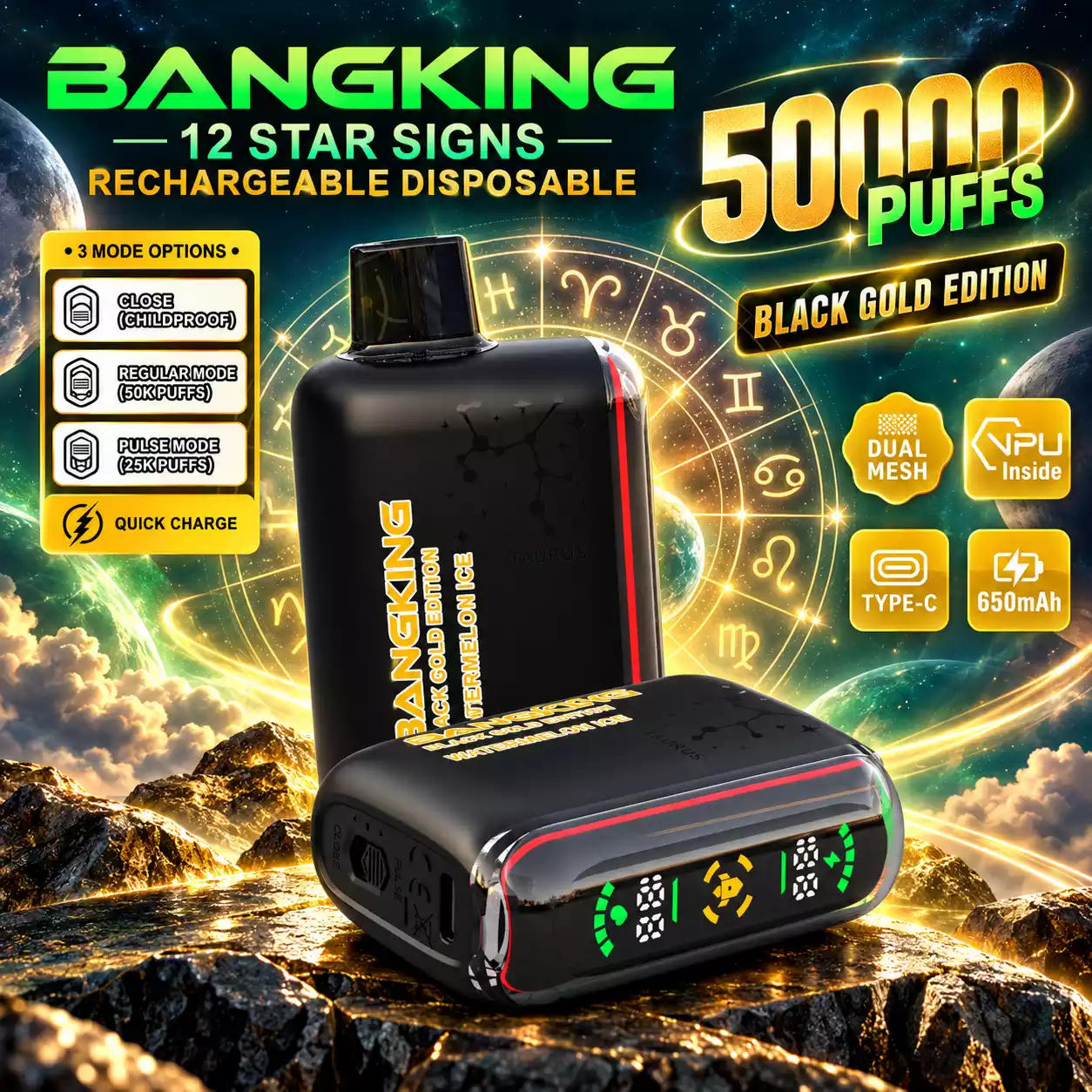
The BANG KING 50K DSK089 product page names a specific model rather than an entire capacity category. Its marketed count appears as part of the title, but the wider hardware description and any different modes still need to be read as one model-specific set of statements. This article has not operated the device or verified its advertised count. The image is taken from the site’s existing media library and is shown to explain how precise catalogue identities prevent mixing one version with another.
At the opposite end of the catalogue, a product carrying a much larger figure illustrates the same principle: the size of the printed number does not replace an exact model identification. If two pages use similar imagery or a familiar brand family, compare their product slugs, product names, offered variations and any model code available. A purchaser or editor should never infer that a photo with one label proves a different product’s rating. This is particularly important for multi-part model families and for catalogues that organize the same product through both brand and numeric subcategories.
Rechargeable hardware changes the comparison, not the definition
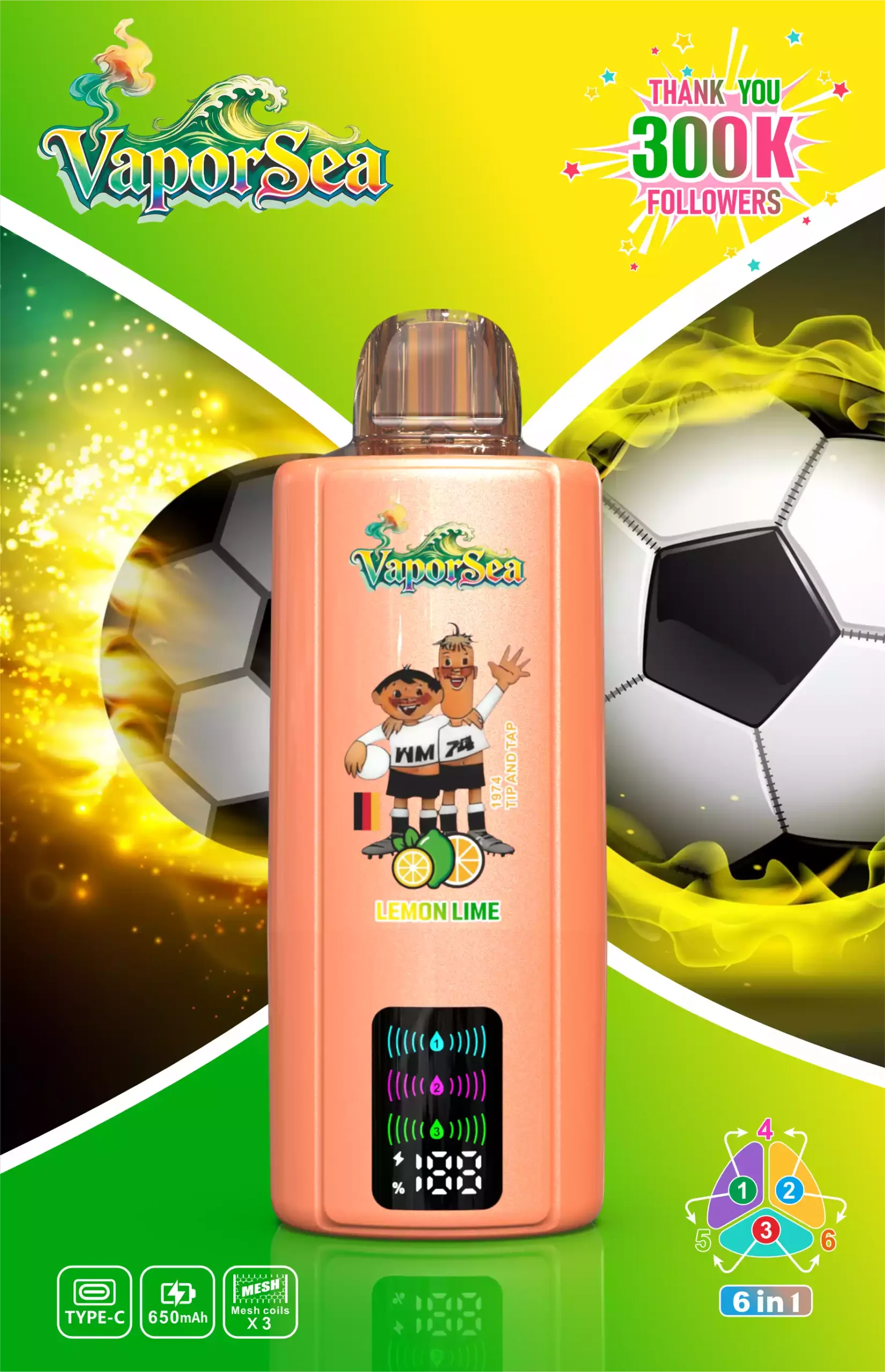
Rechargeable disposable designs bring a separate battery-management question into the same purchase decision. A device may stop producing output when its current battery charge is depleted even though the product has not reached another possible end point. That does not mean users should try to force or modify the device to reach a headline number. Follow the manufacturer’s charging instructions and use only the designated connector or charging arrangement. A charging port alone does not prove unlimited reuse, replaceable components or the accuracy of the advertised total.
Nonrechargeable and rechargeable models can have different practical constraints, so a numerical comparison that ignores the charging arrangement is incomplete. The correct distinction is “how the device is designed to be used and maintained,” not “which option is always best.” Neither class should be treated as evidence of reduced environmental impact without lifecycle data. When a device is damaged, unusually hot, swollen or not functioning as described, stop using or charging it and consult the appropriate support and local collection guidance rather than attempting home modification.
Why a screen or puff counter does not settle the question
A small display can present the current battery state, a selected mode, a count of activations or a symbol related to device status. The screen reports what the internal electronics have been programmed to estimate or record. A live activation counter, where genuinely present, is not the same as the manufacturer’s lifetime puff claim. An approximate battery percentage is not a remaining-puff guarantee either. Product manuals are the appropriate place to confirm what each symbol means for that model; one icon dictionary should not be copied across unrelated hardware.
The video below is an external demonstration of a device marketed with a puff counter. It helps distinguish an on-screen counter from a headline product rating. It is not a review or test conducted by Useevape, is not a recommendation for a particular product, and should not be used to infer specifications for the site’s own models. Readers who want to compare displayed interfaces can explore the existing display category and check each product description rather than assuming identical electronics.
Related video: a counter shown on an actual device
Open this external demonstration on YouTube if the player does not load.
For retailer buyers: questions worth asking a supplier
A wholesale buyer may need to compare dozens of similar model titles before creating a range. Start with verified identifiers, stock-keeping distinctions and a current product photograph. Ask whether the puff number is directly measured or estimated, whether the stated result applies to all modes, and whether any batch documentation exists. Request a clear list of variations and the precise product page associated with each. A product category label should not be copied into a claim of regulatory eligibility or extended warranty. If a supplier cannot provide a method, record the number as a manufacturer claim rather than as a laboratory fact.
The buying process also depends on the receiving country, purchaser type and applicable product restrictions. Within Europe, rules for a device’s composition, sale, shipment, display and promotion are not identical everywhere. Before offering a model online or importing a batch, the merchant should confirm the current legal position for that exact product and destination with a qualified local adviser. The site’s wholesale information page is a navigational starting point for trade questions; it should not be read as proof of permission to sell every listed device in every country.
End-of-life handling belongs in the comparison
The devices discussed here include electronic parts and batteries. The European Commission identifies battery waste and waste electrical equipment as separate collection and treatment concerns. Do not place a damaged or discarded device in ordinary household waste where local separate collection is required, and do not dismantle or puncture a battery at home. Collection arrangements and retailer obligations vary by location. The European Commission’s WEEE information and local municipal guidance are better references than a product’s puff rating.
From a buying-guide perspective, responsible comparison means considering packaging, charging design and end-of-life handling alongside catalogue specifications. The advertised count does not measure waste avoided, recycled material recovered or environmental benefit. Claims that a much larger number automatically makes a device greener would need independent evidence across its complete lifecycle. Where local markets restrict an entire product type, an informational guide should not be misread as sales advice. This page is designed to help readers interpret descriptions, not to override country-specific rules.
A repeatable five-step comparison method
Step 1: identify the exact model and product code. Step 2: distinguish the advertised count from the information actually supported by a manufacturer document. Step 3: compare controls, charging design and screen functions as separate specifications. Step 4: check that the product image, variation listing and category assignment describe the same item. Step 5: verify availability and the legal status of the product in the destination market. This method avoids treating an advertising figure as the whole story and makes it easier to identify where additional documentation is necessary.
A retailer can convert this into a simple internal worksheet with columns for model identifier, claim source, operating mode, stated charging feature, image reference, local compliance review and “not verified” notes. Adults comparing individual catalogue pages can use a shorter version: model, options, documented specifications and restrictions. In both cases, the aim is a transparent decision rather than a formula predicting exact use time. A category page should help readers locate relevant products; a guide such as this one should help them understand the terms used on those pages.
Frequently asked questions
Does 50K mean exactly 50,000 personal draws?
No. It is an advertised figure associated with a model and assumed conditions. Personal draw duration, operating settings and test definitions can vary. Without a disclosed method and independent matched testing, there is no basis for promising an exact result to a particular user. Compare the rest of the product documentation instead of deriving a guaranteed number of days.
Is a 300K model automatically higher quality than a 30K model?
No. Advertised count and quality are separate ideas. Build quality, control design, component consistency, usability, documentation and country eligibility require their own evidence. The larger number can place an item in a different catalogue class, but does not certify better reliability, value or performance. The two models might even be evaluated under different operating assumptions.
Can a battery percentage predict how many puffs remain?
Not reliably as a universal rule. A battery icon usually concerns estimated charge state, while the total number of possible activations depends on more than one variable. Some devices show additional indicators, but their meanings are model-dependent. Check the supplied operating guide instead of treating a percentage as a certified remaining-puff counter.
Are all devices in one puff category tested the same way?
No. A shop category groups listings by advertised number or range, not by a shared laboratory protocol. Before direct comparison, read each listing’s specifications and ask whether the claim is based on measured data, projection or undisclosed manufacturer information. Avoid assuming a single method across brands or revisions.
Why do some products have separate numbers for separate modes?
Different modes can change how the device operates during a draw. If the manufacturer supplies mode-specific claims, those should remain attached to their respective modes. A single headline number should never be rewritten as an unconditional result for every setting, and a guide should not invent mode-specific totals that are not documented.
Can I buy any model shown here throughout Europe?
No universal eligibility is implied. Product-category restrictions, distance-selling rules and advertising rules differ across countries, and some places restrict entire device classes. Confirm the destination country, the specific item, purchaser type and the current legal requirements before making a commercial decision. Photographs and internal links are included for documentation and navigation, not as a statement of legal availability.
Sources, scope and editorial note
For background on repeatable analytical test conditions, consult CORESTA Method 81. For responsible electrical-device collection, consult the European Commission’s batteries guidance and WEEE overview. Manufacturer-stated figures and product identities in the Useevape examples come from site catalogue listings and existing media, not from independent Useevape bench testing. All descriptions should be checked against current records before public publication.